
News
Broad-leaved Melnik vine (Shiroka Melnishka Loza): History, secrets, and why the variety is so rare today

What makes the endemic grape variety Shiroka Melnik (aka Shiroka Melnishka Loza or Broad-leaved Melnik Vine) so rare – and precious – today?
Shiroka Melnik, the ancient indigneous grape of the Melnik Region, Struma River Valley, Bulgaria is rare today because it is a biological hostage to its own history and geography. It is an ancient, hyper-local endemic variety that suffered a perfect storm of environmental, political, and genetic setbacks over the last 150 years.
Several key factors from a historical perspective explain why this legendary vine is so scarce today:
Extreme climatic obstinacy
From an ampelographic (grape-growing) standpoint, Shiroka Melnik is incredibly stubborn. It is a very late-ripening variety, often pushed into mid-to-late October.
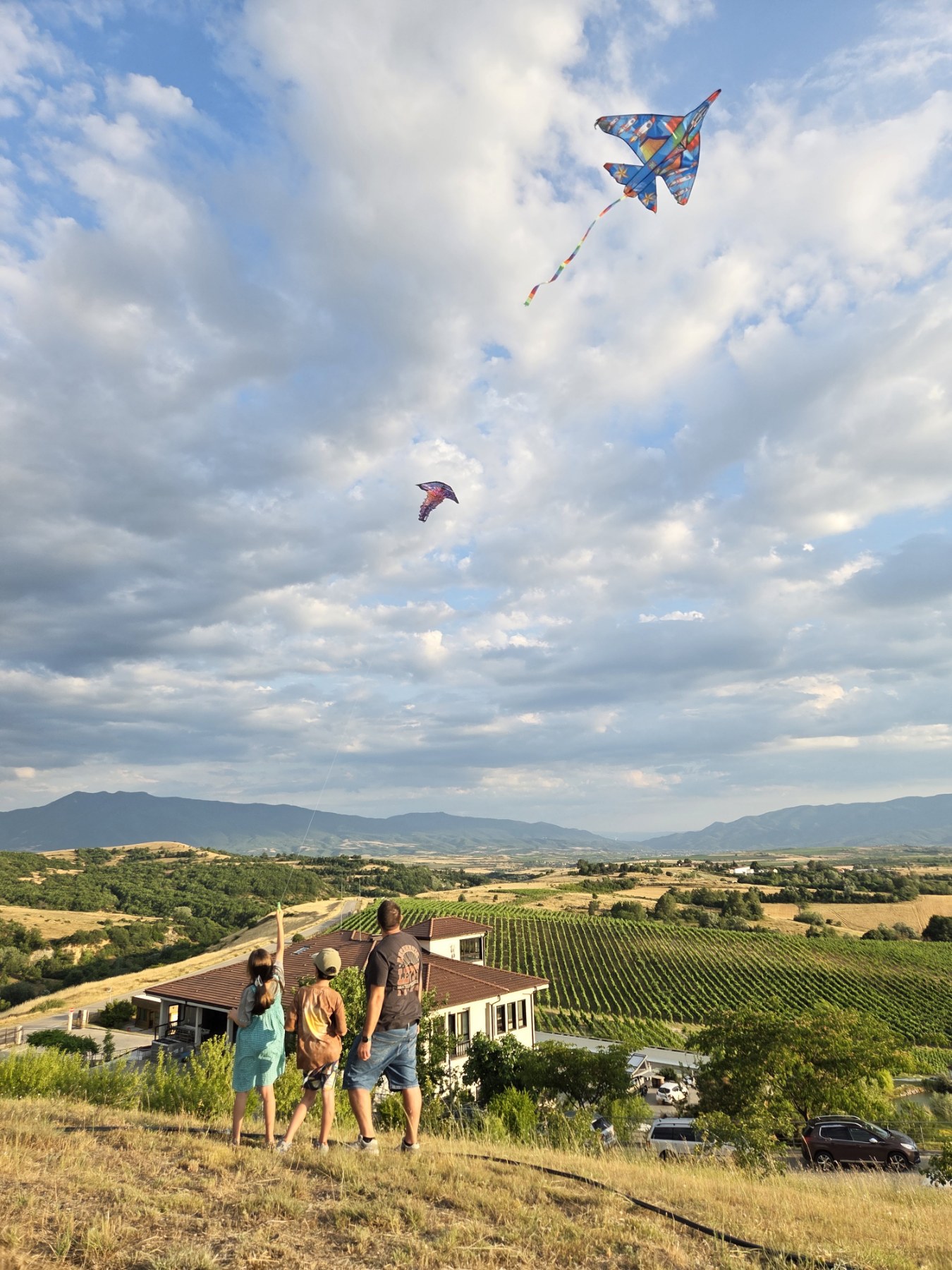
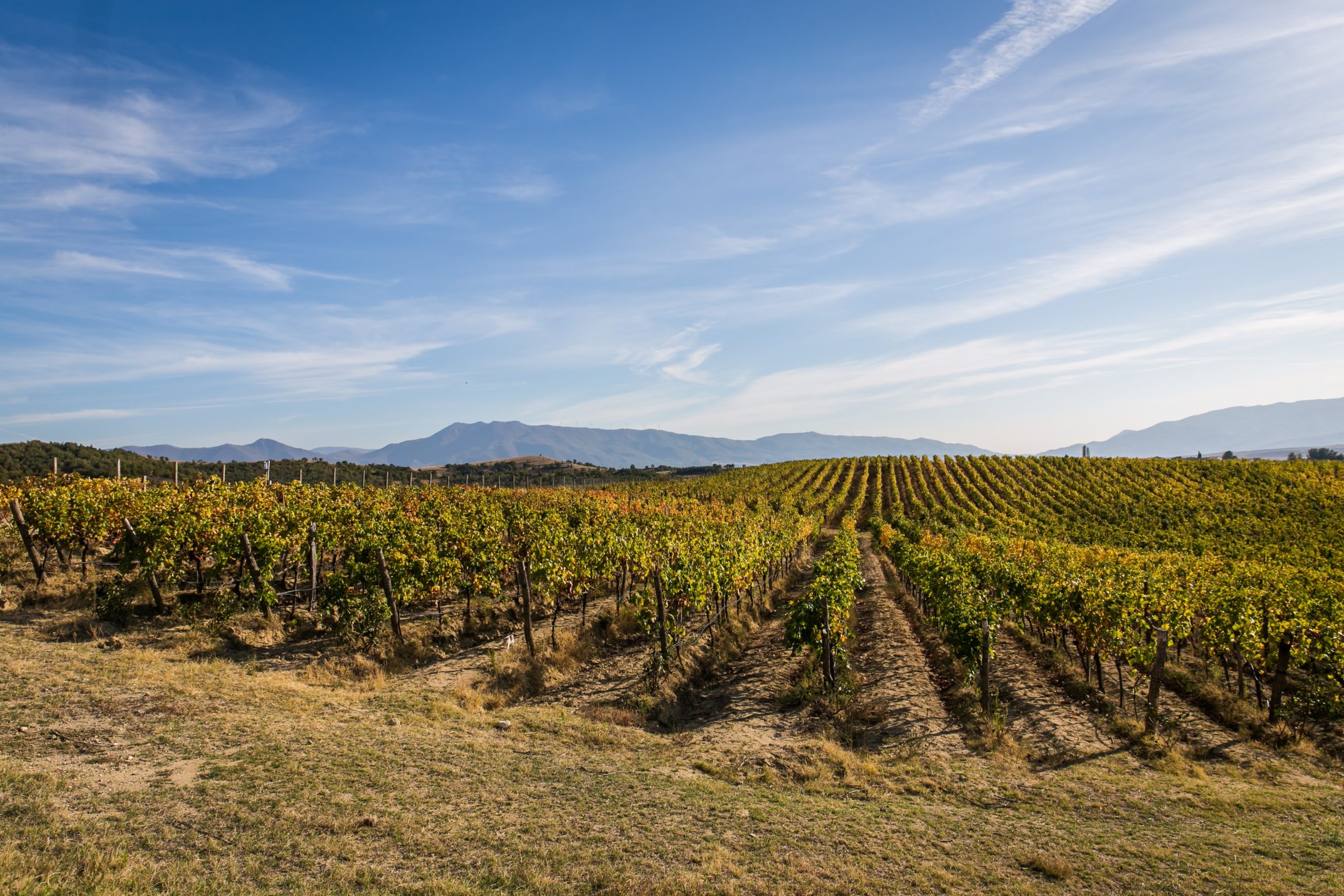
For centuries, it adapted perfectly only to the unique microclimate of the lower Struma River Valley. The Melnik region is nestled south of the Kresna Gorge, in a valley surrounded by the mountains Pirin, Slavyanka (Ali Botush), Belasitsa, Ograzhden and the extinct volcano Kozhuh. The microclimate in the Melnik valley is trans-Mediterranean. The Shiroka Melnik requires an immense amount of annual heat (an active temperature sum of over 4000°C) and completely dry, mild autumns to ripen. It also flourishes in sandstone and limestone soils and benefits from the mountainous breeze in this hilly area, which doesn’t allow humidity to linger among the vines (aka offers natural protection against mildew and diseases).
Historically, every single attempt to cultivate the authentic Broad-leaved Melnik outside of this specific southwestern Bulgarian pocket failed. Because it cannot adapt to continental winters or damp autumns, its global footprint has been strictly confined by geography for over a thousand years. Some attempts have been made to grow Shiroka Melnik in the Thracian Valley of Bulgaria, but the grapes have not reached optimal ripeness and have produced fresh and fruity roses as opposed to the beloved red wines with aromas of cherries, sourcherries, earth and leather typical for this variety.
STAMP OF QUALITY:
Both PDO Melnik and PDO Harsovo are European-recognized Protected Designations of Origin (Защитено наименование за произход), representing the absolute top tier of geographical and quality classification for wine in Bulgaria. .
PDO Melnik is the regional umbrella. It covers vineyards on both sides of the Struma River in the munucipalities Kresna, Sandanski and Petrich, anchoring the collective output of the valley’s winemakers. The grapes allowed to bear the mark PDO Melnik include local staples like Shiroka Melnishka Loza and Melnik 55, but this PDO also permits international varieties (like Syrah, Cabernet Sauvignon, and Merlot) and local whites (like Sandanski Misket) that achieve exceptional, distinct quality in our hot Mediterranean climate.
PDO Harsovo is a micro-terror; a more granular, hyper-specific designation focused strictly on the village level. It was carved out to protect a very particular, highly regarded pocket of the Struma Valley. It centers directly on the rolling, south-facing hills around the village of Harsovo, where the soils are famously dominated by white clay, sand, and limestone deposits. Unlike the broader regional umbrella, PDO Harsovo heavily emphasizes the purity and preservation of our true indigenous variety, Shiroka Melnishka Loza. It functions almost like a single-cru designation, designed to highlight the unique expression that this finicky, late-ripening grape achieves in the specific sandy hills of Harsovo.
The phylloxera devastation
Before the late 1800s, Melnik wine was a massive commercial powerhouse, aged in the town’s famous hand-carved sandstone tunnels and exported by the barrel across Europe. Then, the global phylloxera epidemic—an aphid that destroys vine roots—hit the Balkans.
Shiroka Melnik vineyards were devastated. When it came time to replant, the vines had to be grafted onto American, phylloxera-resistant rootstocks. Replanting was slow, expensive, and altered the natural pacing of the vineyards. Many ancient, self-rooted plots were lost forever, permanently shrinking the grape’s acreage.
Geopolitical disruption
Melnik went through catastrophic demographic shifts in the early 20th century, particularly around the Balkan Wars and World War I. The town shrunk from a bustling mercantile center of over 7,000 residents and thousands of buildings down to a tiny village of just a few hundred people. When the grand merchant families left or were displaced, centuries of accumulated viticultural knowledge and capital vanished. Massive stretches of terraced, mountainside vineyards fell into neglect and were reclaimed by nature, drastically reducing the active population of the vine.
Mid-20th Century genetic crossbreeding
Родословно дърво Мелник
By the mid-20th century, agrarian scientists recognized that Shiroka Melnik’s late ripening was a massive economic risk for farmers (if an autumn was too wet, the entire crop rotted). In the 1960s, state-run viticultural institutes began crossbreeding the ancient Broad-leaved Melnik with faster-ripening varieties (like Valdiguié) to create earlier-ripening hybrids.
The field testing and experimental plots for these new crossbred varieties were in Complex Experimental Station in Sandanski, managed under a team of agronomists: Z. Zankov, Ya. Atanasov and G. Karamitov.
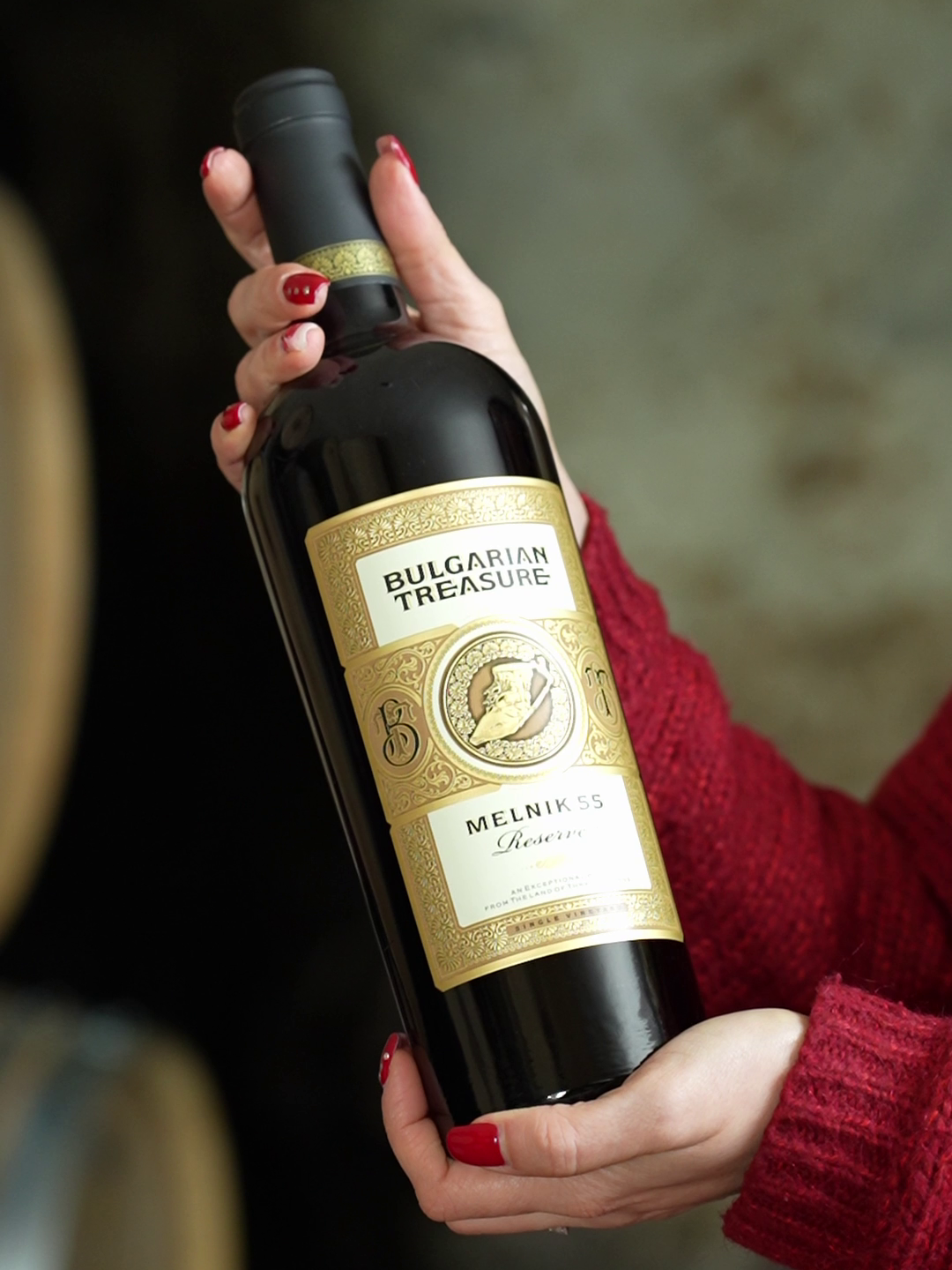
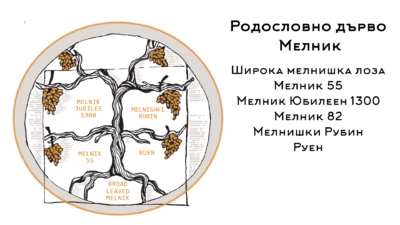
This is when new varieties were engineered: Early Melnik (Melnik 55), Melnik 1300 Jubilee, Melnik 82, Melnik Rubin, Ruen and the white grape Sandanski misket. All of them can be found under the world encyclopedia of ampelography under a common synonym – Melnik. At Villa Melik, we call them the “Melnik Family”.
Shiroka Melnik usually requires waiting until late October or even early November to harvest, leaving it completely vulnerable to autumn frosts and rotting rains. Melnik 55 and it’s brothers, however, achieve optimum sugar and tannin levels by mid-to-late September—effectively shifting the harvest forward by nearly a full month and saving farmers from catastrophic crop losses.
Thus, because Melnik 55 was much easier to manage, harvests earlier, and avoids the autumn rains, many regional growers systematically replaced their old, finicky Broad-leaved Melnik plots with the new crossing.
Today, the true, ancient Broad-leaved Melnik represents only a tiny fraction of total vineyard space. It requires a dedicated commitment to historical preservation, meticulous canopy management, and old-school patience to bring it to its full, powerful, tobacco-and-leather-noted maturity..
At Villa Melnik Winery, preserving and protecting the authentic Broad-leaved Melnik vine, as well as the other indigenous grape varieties of the Struma River Valley, is our mission and greatest pride. Why we made the conscious choice to plant and lovingly tend to these iconic regional varieties — stay tuned, as we will share more in our upcoming article! In the meantime, we invite you to enjoy the rich fruits of our labor and the magic of the Melnik terroir — order directly from our online store here.